Most course creators know they need traffic. The problem isn't knowing that — it's trying to do too much at once.
A bit of Instagram here, some SEO there, a YouTube video, maybe some ads. Each one gets a little attention, none of them get enough, and after a few weeks, it feels like nothing is working.
The fix isn't finding the right platform. It's committing to fewer of them.
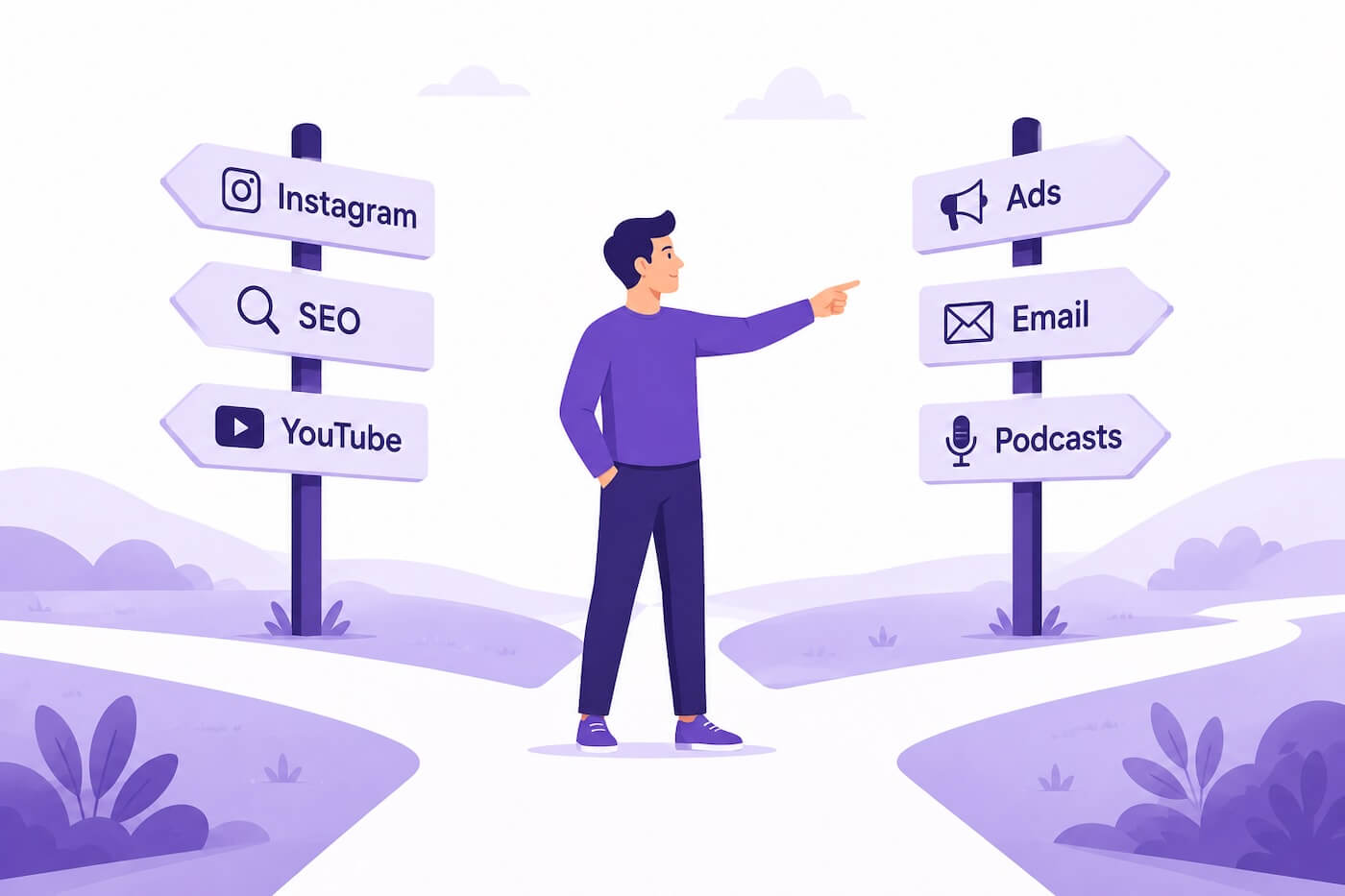
Every traffic method takes time to build. Algorithms reward consistency. Audiences grow through repetition. SEO compounds over months, not days. The creators who get consistent results aren't the ones who found a magic channel. They're the ones who showed up on the same one or two channels long enough for it to work.
Pick two methods, get really good at them, and give them at least 90 days before you judge the results. Most people quit before the compounding kicks in.
If you have an existing list, this is your highest-converting channel. People on your list already know you. A well-written email to a warm audience will always outperform cold traffic.
Best for: any creator with an existing audience, regardless of niche. A health coach with 500 engaged subscribers will consistently outperform someone with 50,000 cold social followers.
Tips: email your list at least once a week, even when you have nothing to sell. Share useful content, insights from your work, and behind the scenes of what you're building. The relationship you build between launches is what makes the launches convert. If you aren't emailing regularly, your competitors are. Study the emails you open and enjoy yourself. Note what they do, what they say, and why it works. Success leaves clues.
Pick one platform where your audience already spends time and show up there consistently. One platform done well beats five platforms done poorly. Where does your audience hang out? Where do they go to learn, browse, post, participate? This is where you need to show up. It's not about creating an audience. It's about showing up where they already are.
Best for: creators who are comfortable sharing their expertise publicly and have a natural affinity for a particular format. A personal development coach might thrive on Instagram with short reflective posts. A business strategist might find LinkedIn generates better leads. A chef or fitness creator might do well with short-form video on TikTok or Reels.
Tips: don't just post content. Engage with others in your niche. Comment thoughtfully on posts from people your audience follows. Show up in conversations before you try to start them. Consistency over six months will always beat a burst of activity followed by silence. Becoming known as the person who does X is highly valuable for your brand. Think less about what you can get and more about what you can give.
The only social platform that also functions as a search engine. Content compounds over time and continues driving traffic long after it's published. If you can deliver value on video, YouTube can be a goldmine. The quality of the content and the value you deliver will matter most. Being genuine and providing real value goes a long way, and it's never been cheaper or easier to achieve a decent production setup.
Best for: creators who can teach on camera and are willing to invest time in longer-form content. Works particularly well for practical skills, including software tutorials, fitness programmes, cooking, business strategy, and language learning. A creator who publishes one well-optimised video per week for a year builds an asset that generates traffic indefinitely.
Tips: focus on search-driven topics early on rather than trending content. A video titled "How to Write a Sales Email for a Course Launch" will continue getting views for years. Titles and thumbnails matter as much as the content itself. Spend time on both.
Slower to build but highly valuable once established. Works best for creators with a specific niche where people are actively searching for answers. Treat this as a slow-burn strategy that you top up regularly with new and updated content. Use AI to write in your voice, drawing on your experience and knowledge, rather than producing generic content that sounds like everyone else.
Best for: creators who enjoy writing and have a niche with clear search demand. A financial coach targeting first-time investors, a productivity consultant helping remote workers, or a language tutor specialising in business Spanish all have audiences actively searching for answers online.
Tips: focus on a small number of specific, high-intent keywords rather than trying to rank for broad terms. "How to price a photography course" is more valuable than "photography tips." One well-written article targeting the right keyword beats ten generic posts. Use your course content as the foundation. If you're teaching it, someone is searching for it.
Reach audiences that already trust someone else. Guest appearances on podcasts, joint promotions with complementary creators, or a simple affiliate programme where others promote your course in exchange for a commission. Like paid ads, this can deliver fast results. The initial challenge is earning enough trust to be invited onto a podcast or included in someone's promotion, but having a social presence, being genuine, and consistently delivering value will all help.
Best for: creators with a clear, well-defined offer who can articulate who it's for in one sentence. Works especially well when you can identify complementary creators whose audiences overlap with yours but aren't direct competitors. A project management course creator might partner with a productivity tools blogger. A copywriting course creator might work with a web design community.
Tips: start with podcast guest spots before building a full affiliate programme. Pitching yourself as a guest on podcasts your audience listens to is one of the fastest ways to reach warm, engaged listeners with zero upfront cost. A single well-matched podcast appearance can drive more sales than weeks of social posting.
The fastest way to get traffic, but it requires budget, testing, and a converting sales page. Works best once you've validated your offer organically. Before running ads, understand who your offer speaks to and who you are targeting. Know your numbers: how much does your product cost to create and run, and how much can you afford to pay for each lead? Make sure you know how your sales funnel converts. You'll likely find that selling your course alone, unless it's high-ticket, may only break even after ad costs. This is where order bumps and upsells become your advantage. They add revenue per sale and make your ad spend far more viable. Before running ads, make sure you have order bumps or upsells in place, and ideally both.
Best for: creators who already have a proven offer, meaning people have bought it, testimonials have been collected, and the sales page converts. Paid ads amplify what's already working. They rarely fix what isn't.
Tips: don't start with paid ads until you've made your first sales organically. Use ads to scale a proven funnel, not to test whether your offer works. Start with a small daily budget and test one variable at a time. Retargeting people who have already visited your sales page is often more cost-effective than targeting cold audiences.
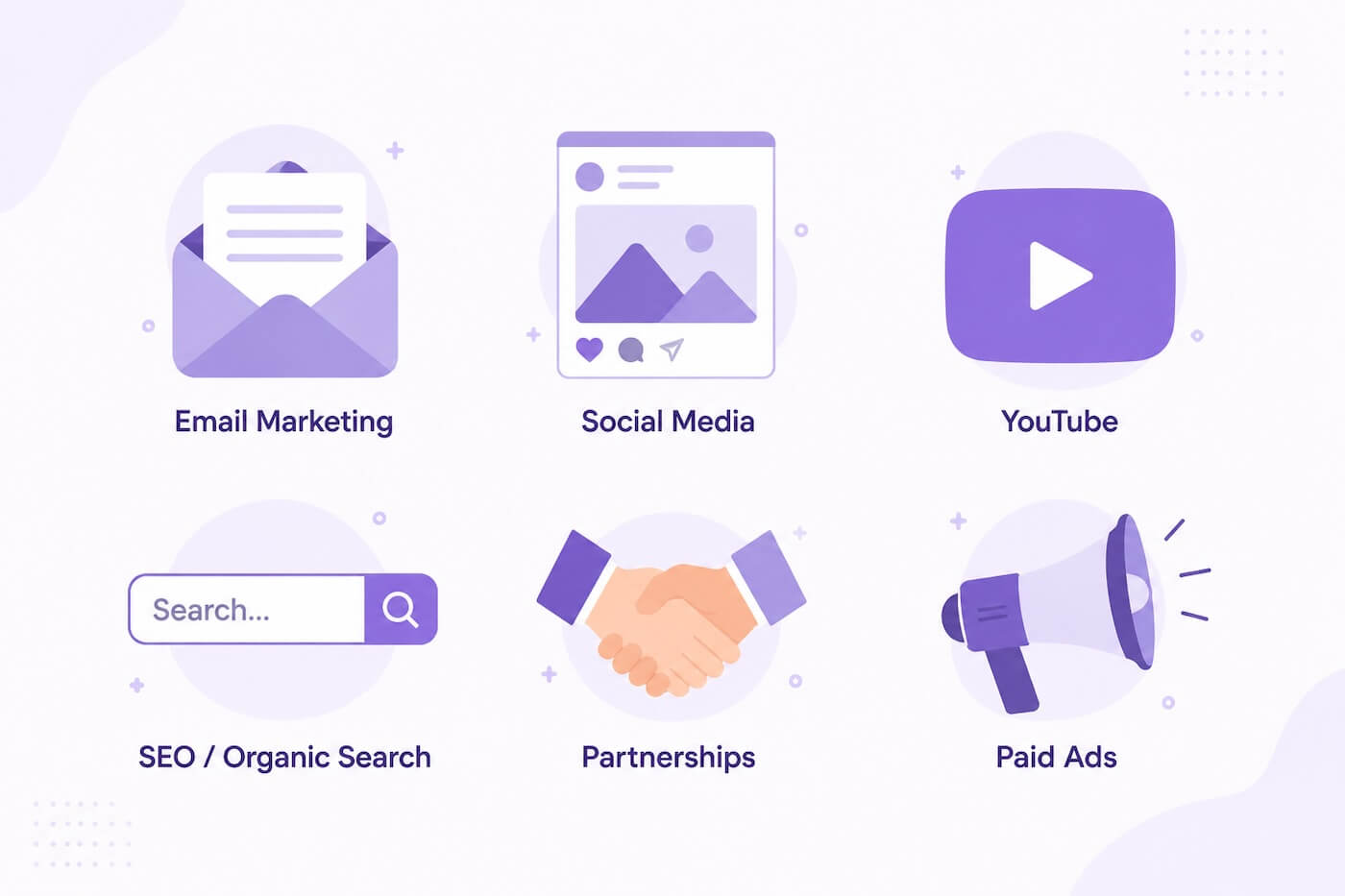
The right answer depends on three things: where your audience already is, what you're willing to do consistently, and what you're naturally good at.
If you hate being on camera, YouTube probably isn't your method. If you have an existing social following somewhere, start there. If you have an email list, that's your first channel.
A few common starting points:
Migrating from another platform with an existing audience: email marketing first, organic social second
Starting fresh with no existing audience: organic social on one platform, with SEO as a slow-burn second
Strong writer with a defined niche: SEO and blogging, with email as your conversion channel
Comfortable on camera: YouTube as your primary channel, with email to convert viewers into buyers
Well-connected in your industry: partnerships and podcast guesting, with email to follow up
Don't pick channels because they seem exciting or because someone else is succeeding with them. Pick the ones you'll actually show up for, week after week, for the next 90 days.
Decide on your two traffic methods this week and write them down. Commit to showing up consistently for 90 days before evaluating whether they're working.
As traffic grows and your first members start joining, use analytics to track where your sales are coming from. That data will tell you which channel to double down on and which to eventually drop.
If you have any questions about growing your course business, we'd love to hear from you.
Log in to Kourses